
En
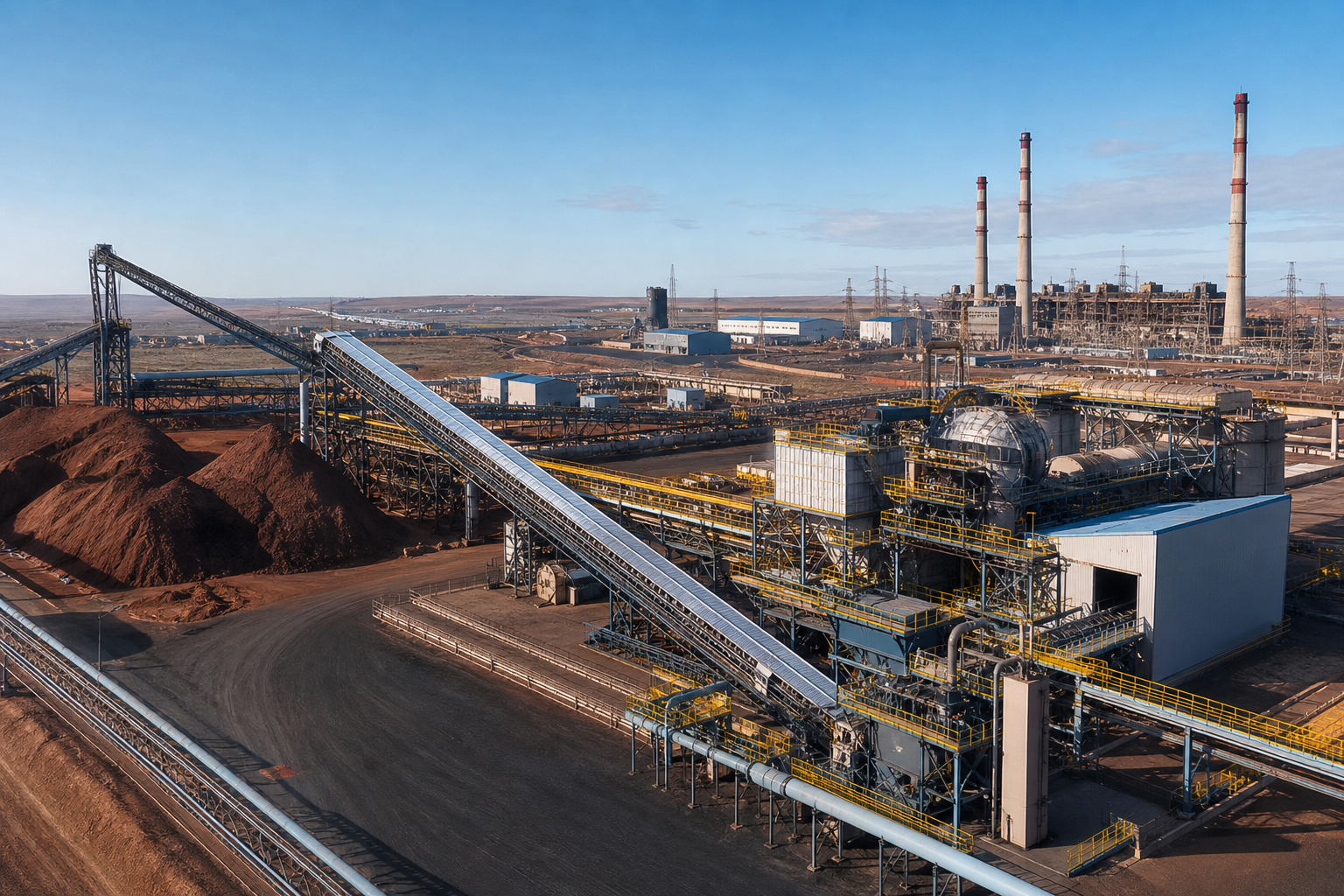
Photo: AI Atameken Business
Chinese corporation East Hope plans to establish a vertically integrated aluminium complex in Kazakhstan, covering the entire value chain from bauxite mining and processing to primary aluminium production and the manufacture of value-added products.
The project is estimated at more than US$10 billion and includes the construction of mining and processing facilities, aluminium smelting operations, and supporting energy infrastructure.
However, the scale of the project raises a key question: Does Kazakhstan have enough economically viable and high-quality bauxite resources to support such a development, given that a significant share of the existing resource base is already allocated to current operations?
To discuss this issue, inbusiness.kz spoke with Said Sultanov, Founder of Aurora Minerals Group.
Said Sultanov: The differences arise because various categories of mineral resource assessment are being used. Some sources refer only to mineable reserves, while others include both measured resources and exploration potential. The most authoritative source remains the State Balance of Mineral Reserves.
Kazakhstan’s principal bauxite deposits are concentrated within the Torgai Bauxite Basin in Kostanay Region. According to publicly available information, Kazakhstan’s industrial bauxite reserves exceed 100 million tonnes, while the overall resource potential is substantially larger.
However, for the aluminium industry, the key factor is not the total resource volume, but rather the amount of ore that can be economically mined and processed. This is why geological resources and mineable reserves are fundamentally different concepts.
Said Sultanov: A comprehensive re-evaluation of Kazakhstan’s entire bauxite resource base has not been conducted in recent years. However, that does not mean the industry is using outdated information. The State Reserve Balance is regularly updated based on production data, exploration results, and reassessments of individual deposits.
At the same time, large-scale investment projects require additional verification of available reserves, taking into account ore quality, mining conditions, and project economics. Such work helps determine which deposits can realistically support new production facilities over the long term.
Said Sultanov: Most explored and development-ready reserves are already held by existing subsoil users, particularly companies within the ERG Group. Historically, Kazakhstan’s resource base was developed to support the country’s existing aluminium industry, meaning the most thoroughly explored and economically attractive deposits are already being mined.
That said, it would be incorrect to suggest that there are no opportunities for new projects.
Major industrial projects begin with investment in geology. Rather than redistributing existing reserves, the task now is to discover new deposits. Investments in exploration today create the resource base for multi-billion-dollar industrial projects tomorrow.
Said Sultanov: Exploration is an essential stage of any project of this scale. It is required to confirm reserve volumes, ore quality, metallurgical characteristics, and economic viability.
Given that much of the existing reserve base is already supplying current operations, the investor must establish its own long-term resource base.
Whether that resource base will support the project’s planned production capacity can only be determined after exploration is completed and reserves are formally approved.
Not All Bauxite Is Equally Valuable
Said Sultanov: Not all bauxite deposits are equally suitable for processing. Their value depends on alumina grade, impurity levels, and mineralogical composition.
Some deposits are well suited for conventional alumina production, while others require more complex and costly beneficiation. In such cases, technology becomes a decisive factor influencing project economics.
This is why the future development of the aluminium industry will increasingly depend on advanced processing technologies, digital modelling, and artificial intelligence. These tools make it possible to economically develop more complex deposits and improve resource utilization.
Said Sultanov: Yes, that is entirely possible.
For large-scale aluminium production, the critical factor is not the total geological resource base, but the volume of bauxite that can be mined and processed at an acceptable cost.
Some deposits require extensive pre-treatment, increasing operating costs. At the same time, modern technologies can make lower-grade resources economically viable. If East Hope has access to such technologies, the project’s potential resource base could expand significantly.
The distinction between geological resources and economically recoverable reserves is crucial for any investor.
Said Sultanov: No.
The closure of Torgai was connected to the depletion of a specific deposit rather than the exhaustion of Kazakhstan’s national resource potential.
Kazakhstan’s bauxite base includes operating mines, confirmed reserves, and prospective exploration targets. Every deposit has a finite life and must eventually be replaced through new exploration programs.
The issue is not whether resources are unlimited, but whether the resource base is continuously renewed and expanded.
Said Sultanov: It is both.
On one hand, innovative mining technologies enable previously uneconomic resources to be developed. On the other, they indicate that the most accessible deposits are gradually being depleted.
This is a natural evolution for a mature mining industry.
Said Sultanov: There is no definitive answer yet.
The outcome will depend on confirmed reserves, future production levels, and long-term supply arrangements.
The Pavlodar Aluminium Plant already has its own integrated supply chain. East Hope will either need to establish an independent resource base or secure long-term supply agreements.
The key question remains whether sufficient volumes of quality bauxite exist to support both operations without negatively affecting existing producers.
If new exploration programs successfully expand Kazakhstan’s resource base, East Hope could become a major catalyst for growth across the country’s aluminium industry.
Said Sultanov: Competition for prospective areas is certainly possible since mineral resources are finite.
However, competition can also stimulate exploration, encourage technological innovation, and lead to the discovery of new deposits.
The critical objective is ensuring that new projects are based on newly discovered resources rather than on reallocating feedstock required by existing operations.
Said Sultanov: Most likely, it is driven by a combination of factors.
Kazakhstan offers substantial mineral potential, a strategic geographic location, established transportation infrastructure, and opportunities for industrial cooperation.
For Chinese investors, producing in Kazakhstan can diversify both raw material and energy risks while improving access to new markets.
For Kazakhstan, it is important that such projects move beyond raw material extraction and contribute to deeper processing, technology transfer, job creation, and value-added manufacturing.
Said Sultanov: Today, East Hope is a major investment project with significant potential, but it has not yet become an operating industrial asset.
Its success will depend on several factors: confirmation of reserves, ore quality, mining costs, and the establishment of a sustainable long-term resource base.
If these requirements are met, the project could significantly strengthen Kazakhstan’s aluminium industry and enhance the country’s position in international markets.
However, it is still too early to guarantee success. The key question remains unchanged: Can the project secure stable access to quality bauxite for decades ahead?
That answer will emerge only after exploration is completed, reserves are officially approved, and the project moves into implementation.
Source: Marina Popova,“China is ready to invest more than $10 billion in Kazakhstan, but there is one problem”, Inbusiness.kz, 11 August 2026.
Original article: China is ready to invest more than $10 billion in Kazakhstan, but there is one problem