
En
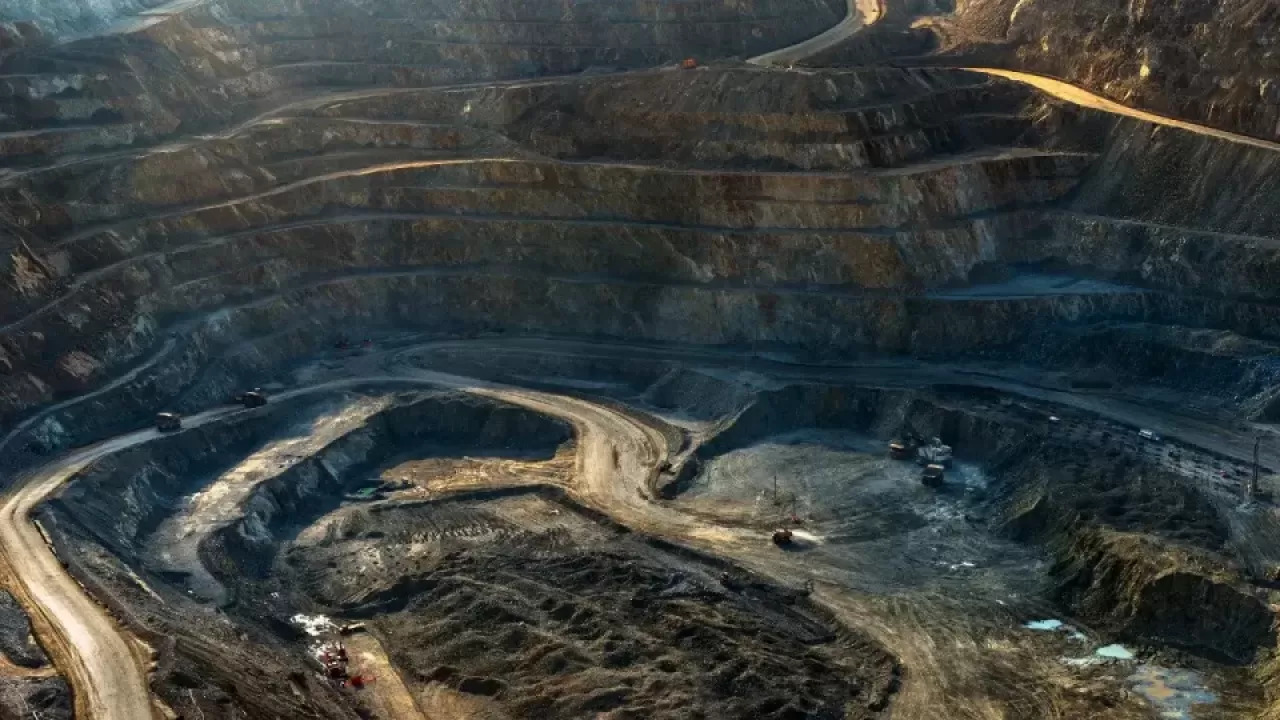
The participation of Chinese companies in the development of Kazakhstan’s mineral resources has long been a subject of public debate. Some view Chinese investment as a source of new technologies and capital, while others fear growing dependence on raw material exports and a loss of control over strategic resources. Why is China actively investing in mineral exploration and mining projects in Kazakhstan today? What does Kazakhstan gain from this cooperation, and can foreign capital become a driver of domestic industrial development? Inbusiness.kz discussed these issues with Said Sultanov, founder of Aurora Minerals Group and an expert in the field of subsoil use.
A: Any investor naturally expects to make a profit. The real question is what the host country receives in return. For Kazakhstan, the key benefits are investment, modern technologies, job creation, and industry development. President Kassym-Jomart Tokayev has repeatedly emphasized that Kazakhstan remains open to foreign investment. Over the past 35 years, Chinese companies have invested more than $30 billion in Kazakhstan’s economy, and today more than 8,500 enterprises with Chinese capital operate in the country. The government aims to attract up to $10 billion in investment annually, and the mining sector remains one of the key destinations for that capital.
Therefore, what matters is not the investor’s country of origin, but the actual economic benefits generated by the project.
A: Chinese investors are active in both mineral exploration and mining. Their interests include copper, gold, polymetallic ores, tungsten, barite, antimony, uranium, and oil and gas projects. However, it would be incorrect to speak of Chinese dominance. Companies from Canada, Australia, the United Kingdom, the United States, Turkey, and EU countries are also actively involved in the sector. Kazakhstan remains a platform for international competition for promising mineral deposits.
A: Kazakhstan possesses one of the world’s largest mineral resource bases. A significant portion of its reserves was explored during the Soviet era, but many deposits now require further exploration using modern technologies.
In addition, the potential for discovering new deposits remains high. This is why both the government and private investors continue to invest in geological exploration to expand the country’s mineral resource base.
A: The main reason is the global growth in demand for critical minerals used in batteries, electric vehicles, microelectronics, and renewable energy equipment.
Kazakhstan has substantial reserves of such resources, making it attractive not only to China but also to investors from Canada, Australia, the United Kingdom, and the European Union. Additional advantages include Kazakhstan’s geographic proximity to China, developed transportation infrastructure, and a favorable investment climate.
A: There is no universal answer. It depends on the specific project, market conditions, and demand. Some raw materials are processed within Kazakhstan, while others are exported, including to China, which is one of the world’s largest consumers of metals and mineral resources.
The key challenge today is increasing the volume of domestic processing. The deeper the processing, the greater the economic value generated for Kazakhstan.
A: Joint projects allow Kazakh specialists to work with modern exploration, mining, and mineral processing technologies. This applies both to equipment and production processes.
China’s experience in processing low-grade ores and complex mineral resources is particularly valuable. Such technologies make it possible to develop deposits that were previously considered economically unattractive.
A: First and foremost, investments in industry development, production modernization, and workforce training. Equally important is the fact that new projects stimulate the growth of service companies, transport infrastructure, and regional economies.
The greatest benefits are achieved when investments become the foundation for developing domestic industry rather than being limited to raw material extraction.
A: Geological exploration is one of the most expensive and high-risk stages of subsoil use. Discovering a new deposit requires years of research, drilling, and laboratory work, and many projects ultimately prove unsuccessful. Therefore, the government attracts private capital willing to finance these risks. This makes it possible to expand exploration activities without placing excessive pressure on the national budget.
Today, digital technologies and artificial intelligence significantly improve exploration efficiency. They help analyze large volumes of geological data more quickly, identify promising areas more accurately, and reduce the risk of costly mistakes.
The key objective is to create conditions where exploration investments lead to new discoveries, strengthen Kazakhstan’s geological sector, train specialists, and expand the country’s mineral resource base.
A: Kazakhstan has preserved a strong geological school and maintains its own network of specialized laboratories. However, the sector faces a shortage of young professionals, while some modern drilling equipment and specialized services are still sourced from abroad. Therefore, workforce development, laboratory modernization, and the growth of the domestic service sector remain major priorities.
A: Reserve estimates are prepared according to international standards and are verified through drilling, laboratory testing, and independent expert reviews. As new information becomes available, estimates may be revised, which is standard global practice.
What matters most is not the company’s origin, but the quality of exploration work and the transparency of reserve estimation methodologies. The use of international standards makes Kazakh projects more understandable and attractive to investors.
A: Yes, it can. The government and national companies are capable of financing exploration activities. However, doing so would require substantial public spending and accepting significant risks. Moreover, Kazakhstan does not yet possess a complete production chain, from exploration to deep processing and manufacturing of finished products.
In many countries, exploration is funded by junior exploration companies. They assume the risks associated with exploration and, upon discovering a deposit, sell the project to larger mining operators. This market segment is only beginning to develop in Kazakhstan despite the adoption of the Code on Subsoil and Subsoil Use.
In my view, Kazakhstan should more actively attract private capital to exploration while focusing public resources on developing processing industries, infrastructure, and industrial machinery manufacturing. One possible tool would be expanding the financing programs of development institutions, including the Baiterek Holding, to support promising early-stage projects.
A: Yes, provided that cooperation extends beyond extraction and includes the creation of processing facilities within Kazakhstan. China has one of the world’s most advanced mineral processing industries, including for rare and rare-earth metals. For Kazakhstan, this presents an opportunity to leverage Chinese investment and technological expertise to produce higher-value-added products instead of merely exporting raw materials.
It is precisely the development of processing industries that can deliver long-term economic benefits.
A: The difference lies not in the investor’s nationality, but in the nature of the project. If investments involve the construction of industrial facilities, infrastructure development, job creation, and tax revenues, the region receives a sustainable economic benefit. If a project is limited to raw material extraction and export, its impact on regional development is far more limited.
One example of an industrial project is the development of the Boguty tungsten deposit in the Almaty Region by Jiaxin International Resources Investment Ltd. Investments are estimated at approximately $450 million, and the planned processing capacity is up to 3.3 million tonnes of ore per year, producing tungsten concentrate.
A: Exactly. Everything depends on the conditions under which projects are implemented. If investments are accompanied by processing facilities, skills development, and modern industrial infrastructure, Kazakhstan gains long-term economic benefits. If cooperation is limited to extraction and raw-material exports, the country remains primarily a supplier of resources.
Therefore, the key issue is not the origin of the capital but the state’s industrial policy. It is this policy that determines whether foreign investment becomes a driver of industrial development or simply increases extraction volumes.
Source: Marina Popova,“Why China Is Investing Billions in Kazakhstan’s Mineral Resources”, Inbusiness.kz, 3 August 2026.
Original article: https://inbusiness.kz/ru/news/pochemu-kitaj-vkladyvaet-milliardy-v-nedra-kazahstana